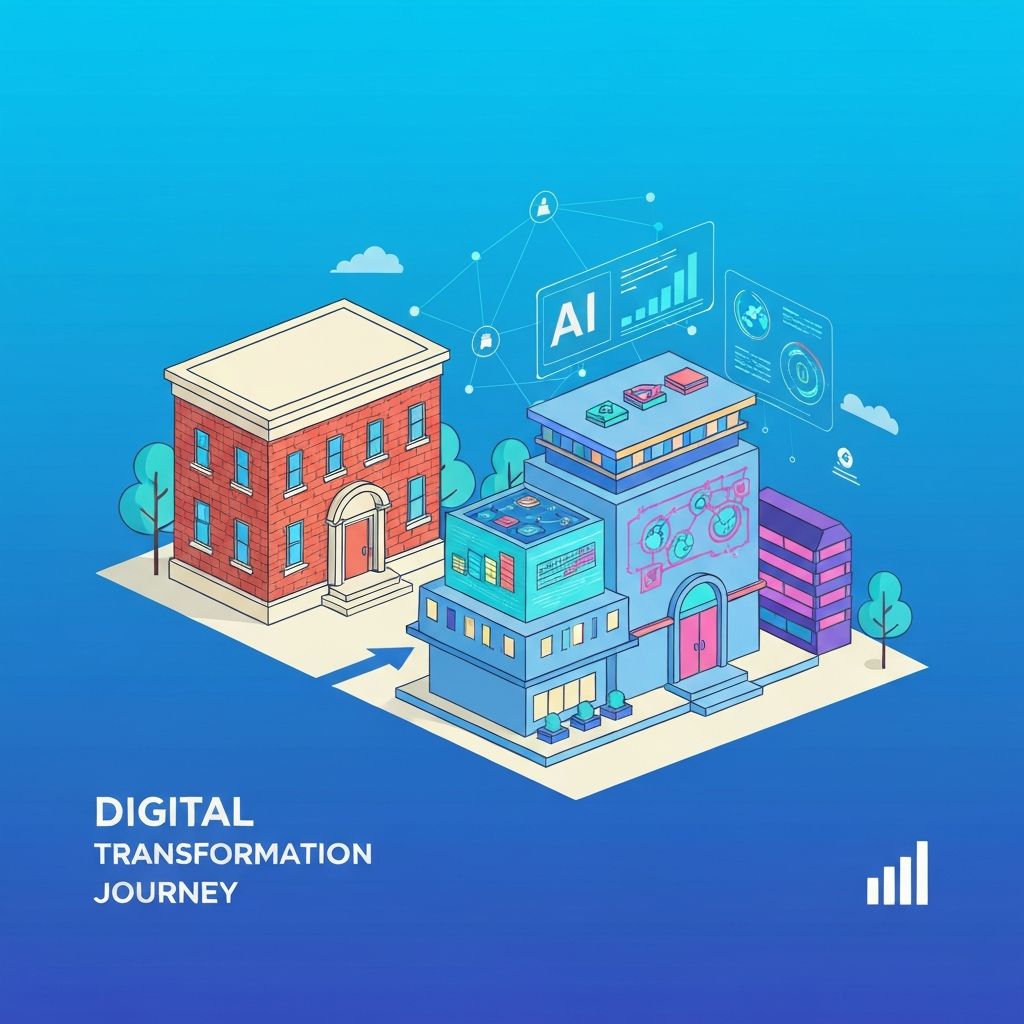
The Digital Imperative for Traditional Businesses
Digital transformation isn't optional anymore. Customer expectations, competitive pressure, and operational efficiency demands make digital capabilities essential for survival.
But traditional businesses face unique challenges: legacy systems, established processes, workforce skill gaps, and often a culture that resists change. This guide provides a practical roadmap for navigating these challenges.
Understanding Digital Transformation
Digital transformation is more than technology adoption. It's a fundamental rethinking of how business is done, including:
- Customer engagement
- Operational processes
- Business models
- Organizational culture
What It's Not
- Just implementing new software
- A one-time project
- Only the IT department's responsibility
- Digitizing existing paper processes
The Transformation Framework
Phase 1: Foundation
Build the capabilities needed for transformation:
- Modern infrastructure (likely cloud-based)
- Data management capabilities
- Integration architecture
- Security foundation
Phase 2: Digitization
Convert analog processes to digital:
- Document management
- Workflow automation
- Digital communication
- Online transactions
Phase 3: Optimization
Use digital capabilities to improve:
- Process efficiency
- Customer experience
- Decision making
- Resource utilization
Phase 4: Transformation
Fundamentally reimagine the business:
- New business models
- New revenue streams
- New customer relationships
- New ways of working
Practical Steps to Get Started
1. Assess Your Current State
Understand where you are:
- Technology maturity
- Process efficiency
- Customer satisfaction
- Competitive position
2. Define Your Vision
Where do you want to be?
- Customer experience goals
- Operational efficiency targets
- Competitive positioning
- Cultural aspirations
3. Identify Priority Areas
Focus on areas with:
- High customer impact
- Significant inefficiency
- Competitive vulnerability
- Quick win potential
4. Start Small, Learn Fast
Pilot projects before major commitments:
- Test assumptions
- Build capabilities
- Demonstrate value
- Generate momentum
5. Build Momentum
Success breeds success:
- Celebrate wins
- Share learnings
- Expand successful pilots
- Tackle bigger challenges
Managing Change
Technology is often the easy part. Managing organizational change is harder.
Leadership Commitment
Transformation must be driven from the top. Leaders must:
- Champion the vision
- Allocate resources
- Remove obstacles
- Model new behaviors
Employee Engagement
Your people make or break transformation:
- Communicate the why
- Involve people in design
- Provide training and support
- Celebrate contributions
Culture Evolution
Culture changes slowly but must change:
- Encourage experimentation
- Accept productive failure
- Reward innovation
- Challenge "we've always done it this way"
Common Pitfalls
Technology-First Thinking
Starting with technology rather than business problems leads to expensive solutions nobody uses.
Boiling the Ocean
Trying to transform everything at once overwhelms the organization and delays value.
Ignoring Legacy Systems
Existing systems can't be wished away. Plan realistic migration paths.
Underinvesting in Change Management
Technical implementation without organizational readiness fails.
Ready to start your digital transformation journey? DEV IT SOLUTIONS provides strategic consulting and implementation services to help traditional businesses navigate digital change.